179 Prom. du Portage, 4th floor, Gatineau, QC J8X 4B7, Canada


16 Jul
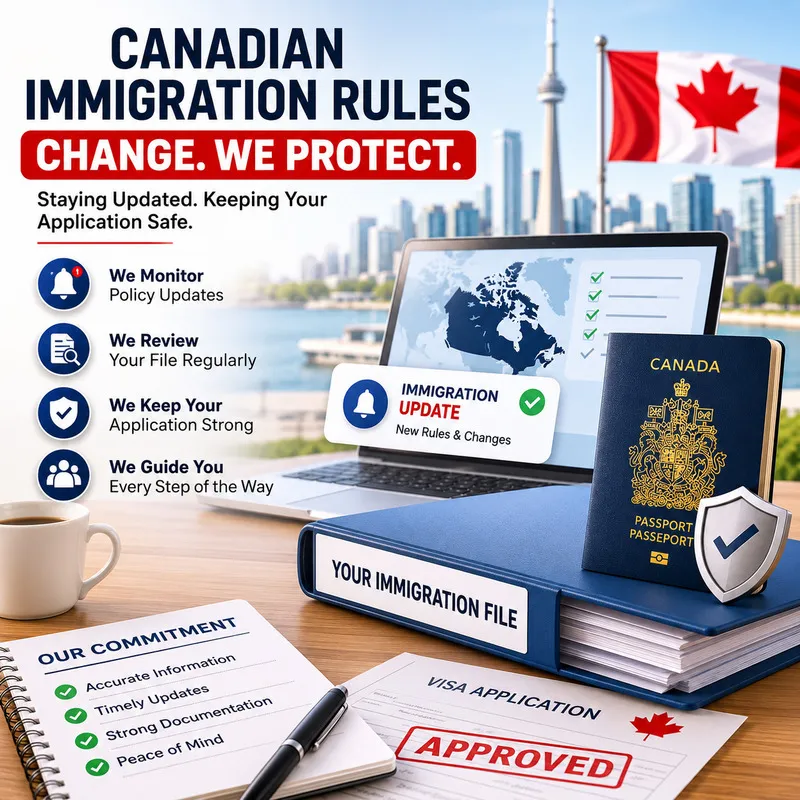
Canadian immigration policies are constantly evolving. Program requirements, eligibility criteria, documentation standards, processing procedures, and government priorities can change with little notice. For applicants pursuing a study permit, work permit, visitor visa, or permanent residency, these updates can create uncertainty and sometimes affect application strategies.
Many applicants worry about how sudden policy changes could impact their immigration plans. While no consultant can control government decisions, proactive preparation and continuous monitoring can help reduce risks associated with changing immigration requirements.
At Charterlane Immigration, staying informed about policy developments and helping clients adapt to changes is an important part of the application management process.
Canada regularly updates immigration programs to address:
As a result, immigration applicants may occasionally encounter new requirements, updated eligibility criteria, revised document requests, or modified processing procedures.
Understanding that change is a normal part of the Canadian immigration system can help applicants prepare more effectively.
Policy changes can impact applications in different ways depending on the immigration category.
Potential effects may include:
Applicants who are not actively monitoring these developments may miss important updates that could affect their applications.
One of the best ways to minimize the impact of immigration changes is to prepare applications as early and accurately as possible.
Early preparation helps applicants:
A well-prepared application is often easier to adapt if policy updates occur during processing.
Immigration policies can change at various stages of an application process.
This is why ongoing file monitoring is important.
Regular review helps identify:
Monitoring helps applicants stay informed and prepared throughout the process.
While immigration rules remain under government control, Charterlane Immigration focuses on helping clients respond effectively when updates occur.
Immigration professionals regularly monitor official announcements, regulatory changes, and program updates that may affect applicants.
This helps ensure that guidance reflects current requirements.
When significant updates occur, existing applications may be reviewed to determine whether any adjustments or additional documentation may be beneficial.
This proactive approach helps reduce surprises later in the process.
Strong documentation remains important regardless of policy changes.
Applicants are encouraged to maintain:
Being prepared can make it easier to respond if requirements change.
Immigration updates can create confusion and uncertainty.
Clear communication helps applicants understand:
Timely information allows applicants to make informed decisions.
When immigration programs change, documentation often receives increased attention.
Applications supported by:
are generally easier to assess and update when necessary.
Strong documentation helps create flexibility if additional information is requested later.
Not necessarily.
Some policy changes apply only to future applicants, while others may affect applications already in process. Each update must be evaluated individually.
In some situations, applicants may need to provide additional documents or respond to new requirements. The specific response depends on the nature of the policy change.
Every case is different. However, delaying an application solely because future changes might occur is not always beneficial.
Obtaining professional guidance can help applicants make informed decisions based on current requirements.
A structured application process helps reduce uncertainty during periods of change.
This includes:
A systematic approach helps applicants remain prepared even when immigration programs evolve.
Charterlane Immigration understands that changing immigration policies can create stress for applicants and families.
The firm's approach focuses on:
The goal is to help clients navigate immigration processes with greater confidence, regardless of changing requirements.
Changes in Canadian immigration rules are a normal part of the immigration landscape. While applicants cannot control government policy decisions, they can take steps to prepare for potential updates.
Accurate documentation, proactive planning, continuous monitoring, and professional guidance can help reduce uncertainty and improve application readiness.
By staying informed and maintaining a well-prepared file, applicants are often better positioned to respond effectively when immigration requirements evolve.
Immigration policies and program requirements can change periodically based on government priorities and economic needs.
Some updates may affect active applications, while others apply only to future applicants.
Charterlane Immigration regularly follows official announcements and program developments to help clients stay informed.
Strong documentation helps applicants respond more effectively if additional information or updated requirements are introduced.
Professional guidance can help applicants understand updates, assess their impact, and make informed decisions throughout the process.