179 Prom. du Portage, 4th floor, Gatineau, QC J8X 4B7, Canada


18 Jul
Receiving a Canada visa refusal can be disappointing, frustrating, and stressful. Many applicants invest significant time, effort, and money into preparing their applications, only to receive a refusal letter from Immigration, Refugees and Citizenship Canada (IRCC).
However, a visa refusal does not always mean the end of your Canadian immigration plans. In many cases, understanding the reason for the refusal and taking the appropriate corrective steps can improve the chances of success in a future application.
At Charterlane Immigration, helping applicants understand visa refusals and identify potential solutions is an important part of the immigration support process.
One of the most common misconceptions is that a visa refusal permanently prevents someone from applying again.
In reality, many applicants successfully submit future applications after addressing the concerns identified by immigration officers.
A refusal simply means that the officer was not fully satisfied that the application met all requirements at the time of assessment.
The next step is understanding why the application was refused.
Every case is unique, but several issues appear frequently in refusal decisions.
Missing or incomplete documentation can make it difficult for immigration officers to assess an application properly.
Examples include:
Strong documentation helps support the credibility of an application.
Financial capacity is an important factor in many visa categories.
Officers may have concerns about:
Applicants must demonstrate that they can support themselves during their stay in Canada.
For visitor visas and study permits, officers often assess whether the purpose of travel is reasonable and well-supported.
Applications may face challenges if:
Clear explanations can help strengthen an application.
Applicants may need to demonstrate strong reasons to return to their country of residence when applying for temporary visas.
Officers may consider:
Strong ties can help support temporary resident applications.
Discrepancies between documents, forms, or statements can raise concerns during processing.
Consistency is important throughout the application package.
Many applicants immediately submit a new application without fully understanding why the previous one was refused.
This approach can result in repeated refusals if the underlying issues remain unresolved.
A detailed review of the refusal reasons can help identify:
Understanding the problem is often the first step toward finding a solution.
The refusal letter provides important information about the officer's concerns.
Applicants should carefully review all reasons listed in the decision.
Submitting another application immediately without addressing the previous concerns may not improve the outcome.
A strategic review is often more effective.
If documentation was insufficient, additional evidence may help strengthen a future application.
Examples may include:
Professional review can help identify issues that applicants may overlook on their own.
Understanding the specific concerns raised by immigration authorities is critical before moving forward.
A refusal does not always mean that an applicant lacks options.
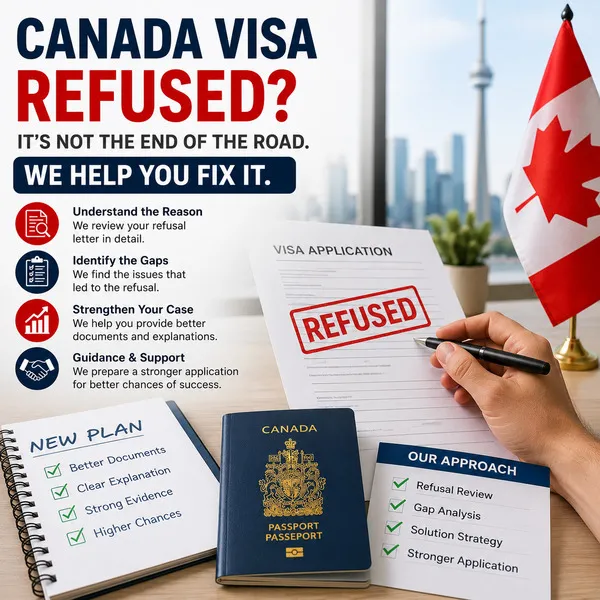
Charterlane Immigration focuses on helping applicants understand refusal decisions and prepare stronger future applications.
The first step involves reviewing the refusal decision and supporting documentation to identify potential concerns.
Applications may be assessed for:
Every case is different.
Based on the circumstances, applicants may benefit from:
The goal is to address previous concerns and improve the overall quality and clarity of the application.
One of the most important aspects of addressing a refusal is honesty.
Applicants should never:
Transparency helps maintain credibility and supports compliance with Canadian immigration requirements.
Charterlane Immigration believes that every applicant deserves clear information and realistic expectations.
The firm's approach includes:
The focus is on helping applicants understand their situation and make informed decisions regarding future applications.
A Canada visa refusal can be discouraging, but it does not necessarily end your immigration journey. Many refusals occur because of documentation issues, financial concerns, insufficient evidence, or application weaknesses that may be addressed in a future submission.
The key is understanding the reasons behind the refusal and taking the appropriate steps to strengthen the application.
With careful preparation, accurate documentation, and informed guidance, applicants can often move forward with greater confidence and a clearer strategy.
Yes. Many applicants submit future applications after addressing the concerns identified in the refusal decision.
Not always. It is generally advisable to understand and address the refusal reasons before reapplying.
Common reasons include insufficient documentation, financial concerns, weak travel purpose explanations, and concerns about ties to the home country.
Charterlane Immigration reviews refusal decisions, identifies potential concerns, and helps applicants prepare stronger future applications.
Previous refusals must usually be disclosed, but many applicants still obtain approvals after addressing the issues that led to the original refusal.